Bicycle Accident Lawyer Help for Accidents Caused by Opening Car Doors
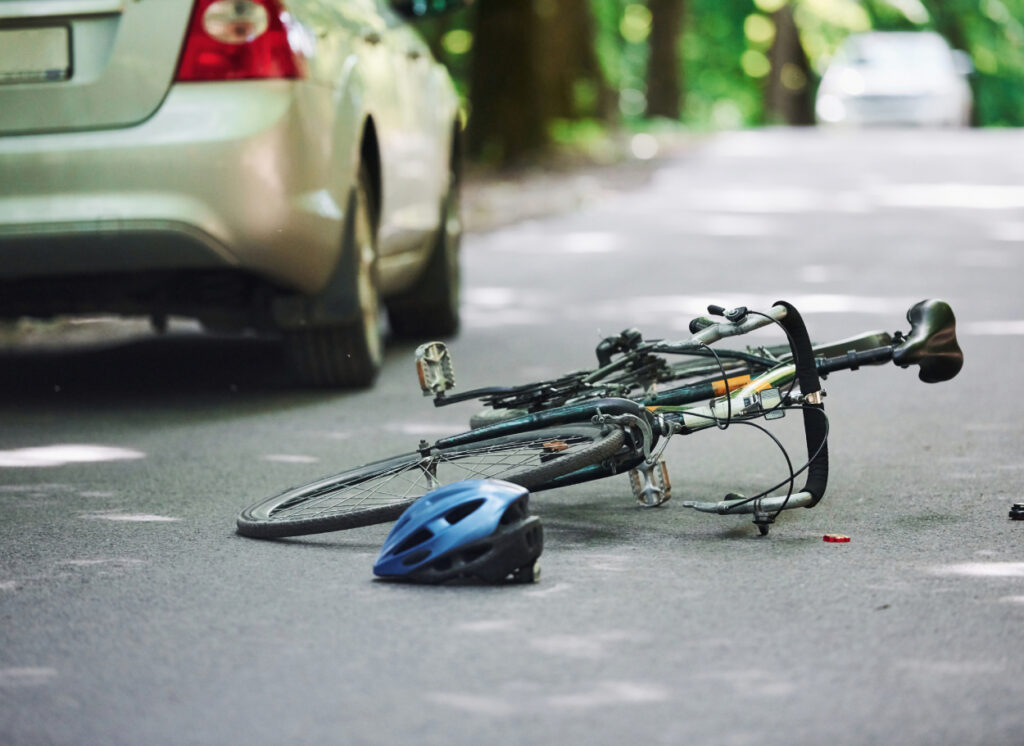
A rider moving along a city street has only a sliver of room to work with. Parked cars on one side, moving traffic on the other, potholes and drains below, and almost no time to react when a driver or passenger swings open a door without looking. In bike injury work, this kind of crash has a name that most cyclists know immediately: a dooring accident.
These collisions can be deceptively severe. From a distance, it may sound like a minor impact, a bike hitting a car door at neighborhood speed. In practice, a rider can go over the handlebars, strike the edge of the door with a shoulder or face, or get thrown into moving traffic. Broken wrists are common because cyclists instinctively try to catch themselves. Shoulder separations, collarbone fractures, concussions, dental injuries, and knee damage show up often too. When the rider gets pushed left into a travel lane, the danger escalates fast.
That is where a Bicycle Accident Lawyer often becomes important. Not because every claim needs a courtroom battle, but because dooring cases raise practical questions that matter to the value of the claim and to whether the injured rider gets paid at all. Who opened the door, the driver or a passenger? Was the cyclist inside a bike lane, outside it, or passing a double-parked car? Did the rider have lights at dusk? Is there video before it gets erased? Which insurance policy applies if the person who opened the door was a rideshare passenger, a child, or someone exiting a work vehicle?
A good lawyer knows that dooring cases are rarely just about the instant the door opened. They are about what happened in the ten seconds before impact, what evidence survives the first week, and how local traffic laws treat the duty to check before opening a door into traffic.
Why dooring accidents happen so often
Urban streets train drivers to focus on moving vehicles. People check mirrors for cars, glance over a shoulder for a bus, then forget that a bicycle may be approaching in the narrow zone beside parked cars. Passengers are often even less careful. They may be looking at a phone, talking, paying a fare, gathering bags, or ushering a child out of the back seat. They do not feel responsible for the traffic side of the exit, yet the law often places responsibility on the person opening the door.
The danger increases on streets with painted bike lanes that run directly beside parking spaces. Many riders call this the door zone, and for good reason. A standard car door can open several feet into the lane. A cyclist traveling 12 to 18 miles per hour has very little stopping distance. Even an attentive rider may not avoid a door that appears suddenly two or three bike lengths ahead.
Dooring also tends to happen in predictable clusters. Restaurant rows at dinner time. Schools during pickup. Rideshare drop-offs near hotels, arenas, and office buildings. Delivery corridors where vans stop repeatedly. Older neighborhoods where parking is tight and drivers are more likely to step directly into a live lane.
These patterns matter because they shape what a careful lawyer investigates. If the crash happened outside a busy restaurant, there may be exterior cameras. If it involved a rideshare, the trip records and app timing may help identify the passenger and the driver. If it happened near a commercial building, maintenance or security footage may exist for only a few days before it is overwritten.
The legal duty is often clearer than people expect
In many states and cities, traffic laws prohibit opening a vehicle door on the side available to moving traffic unless it is reasonably safe to do so, and they also prohibit leaving the door open longer than necessary. The exact wording varies, but the principle is familiar: look first, open only when safe.
That sounds simple, yet insurance carriers often try to blur it. They may argue the cyclist was traveling too close to parked cars, moving too fast for conditions, riding outside a designated lane, or failing to keep a proper lookout. Sometimes there is a kernel of truth in those arguments. Experienced riders are taught not to hug parked cars. But street design, traffic conditions, and basic physics limit a cyclist’s options. A rider may have been forced toward the parked cars by passing traffic, debris, construction barriers, or a bus.
This is where legal judgment matters. The question is not whether the rider was perfect. It is whether the person who opened the door created an unreasonable hazard and whether that hazard caused the crash. In many cases, the answer is yes even if the cyclist could have done something differently in hindsight.
A Bicycle Accident Lawyer will usually frame the case around duty, foreseeability, and reaction time. If a door opens suddenly into a cyclist’s path, the rider may have no meaningful chance to avoid impact. That is very different from a case where a rider can see a car standing open for several seconds and still collides with it. Small factual distinctions like that can change liability discussions dramatically.
Who can be responsible
One of the most common misunderstandings is the idea that only the driver can be at fault. In reality, the person who physically opened the door may be liable, even if that person was a passenger. Depending on the facts, more than one party may share responsibility.
A lawyer usually considers several possibilities at once. The driver may be responsible for stopping unsafely, failing to warn a passenger, or letting out passengers in a dangerous location. The passenger may be responsible for opening the door into traffic. An employer may be implicated if the vehicle was being used for work. A company vehicle may bring commercial insurance into the case. A rideshare situation can be especially fact-sensitive because the driver, the passenger, and the platform relationship all need to be sorted out carefully.
Children present another wrinkle. If a child opens the rear door into a cyclist, there may be questions about the supervising adult, the driver’s choice of stopping location, and the available insurance coverage. The legal analysis can get technical quickly, which is another reason early case review helps.
The first hours after a dooring crash often shape the whole claim
Dooring cases are won or weakened by evidence. Not dramatic evidence in every case, just basic facts captured before they disappear.
A rider with a fractured wrist may not be thinking about photographs, witness names, or preserving helmet damage. That is completely understandable. Still, from a claims perspective, those details matter. The angle of the door, skid marks, bike position, mirror damage, paint transfer, torn clothing, and a swollen shoulder photographed the same day can become more persuasive than a polished statement given months later.
If you can safely do so, the most useful immediate steps are often these:
- Get medical attention and report all symptoms, even if adrenaline is masking pain.
- Identify the driver, the passenger who opened the door, the vehicle, and the insurer.
- Photograph the car door, the street layout, the bike, injuries, and any nearby cameras.
- Speak to witnesses briefly and save their contact information before they leave.
- Avoid a detailed recorded statement to an insurer until you understand the injuries and facts.
That short list is not about turning an injured cyclist into an investigator. It is about preserving the basics. I have seen otherwise solid cases become harder because no one identified the passenger who opened the door, or because nearby businesses erased footage after seventy two hours, or because the initial report described only “minor pain” before a concussion and shoulder tear became obvious days later.
Medical issues in dooring cases are often more serious than the property damage suggests
Carriers love to point to a nearly undamaged vehicle or a bent bike wheel and imply the collision could not have caused serious injury. That argument ignores how bike crashes work. The cyclist’s body, not the car, absorbs much of the force.
A direct strike to the edge of an open door can break a hand, forearm, elbow, or clavicle. A rider who flips can suffer a head injury even with a helmet. Helmets help tremendously, but they do not prevent every concussion. Riders who twist while trying to avoid a door often end up with soft-tissue injuries that sound minor on paper and become disruptive for months: rotator cuff strains, cervical sprains, lumbar pain, hip bursitis, or a knee that swells every time they return to commuting.
The difference between a fair settlement and a disappointing one often turns on whether those injuries were documented thoroughly and treated consistently. Lawyers who handle bicycle cases understand the rhythm of these claims. A fractured wrist for an office worker is painful. For a contractor, a chef, a dental hygienist, a nurse, or anyone whose work depends on grip strength and repetitive hand use, it can be financially devastating. A separated shoulder may not look catastrophic in an X-ray summary, yet it can make sleeping, lifting, and bike commuting miserable for a long stretch.
That lived impact belongs in the claim. Insurance adjusters review records, but they also evaluate how the injury changed daily function. A strong file does not just say “shoulder pain.” It shows missed work, modified duties, physical therapy progress notes, trouble carrying groceries, canceled race entries, and the inability to ride a child seat or commute to work.
Comparative fault can reduce recovery, but it does not always defeat the case
Many injured riders hesitate to call a lawyer because they think they were partly to blame. Maybe they were riding near the door zone. Maybe they passed slowly on the right of stopped traffic. Maybe they were not using the exact route a driver thinks they should have used. That does not automatically end the claim.
Most states use some form of comparative negligence, meaning fault can be shared. The practical effect depends on local law. In some places, an injured person can still recover even if partly at fault, though the recovery is reduced by that percentage. In other places, crossing a certain fault threshold can bar recovery.
This matters because dooring crashes often involve competing narratives. The insurer says the cyclist should have anticipated the risk. The cyclist says the door opened abruptly when there was no time to avoid it. A Bicycle Accident Lawyer evaluates the street geometry, traffic flow, and timing, then decides how to present the case in a way that fits the law of the state.
There are edge cases worth noting. If a cyclist is riding at night without required lights, that may become a genuine issue if visibility is disputed. If the rider was weaving unpredictably between parked cars and traffic, that could weaken the claim. On the other hand, if the driver or passenger opened the door straight into an active bike lane at noon on a clear day, comparative fault arguments may carry little weight.
Experience helps separate what is merely unflattering from what is legally significant.
Insurance questions are rarely as straightforward as people expect
People tend to assume a simple rule: the car owner’s insurance pays. Sometimes that is true. Sometimes it is only part of the story.
A privately owned vehicle may have bodily injury coverage that applies to the dooring event. If the driver was working, a commercial policy may come into play. If the person opening the door was a passenger in a rideshare vehicle, there may be multiple layers of insurance issues and platform-specific questions. If the at-fault vehicle is uninsured or underinsured, the cyclist may need to look at personal auto coverage, household policies, or other state-specific avenues, even though the injured person was on a bike and not in a car.
That surprises many clients. They do not realize their own uninsured or underinsured motorist coverage may help in some jurisdictions, or that coverage questions can turn on policy language, occupancy definitions, and local case law. These are not details most people should try to parse while recovering from a concussion or surgery.
A lawyer’s job here is not just to demand money. It is to identify all realistic coverage sources before the case gets boxed into a single low-limit claim.
What a Bicycle Accident Lawyer actually does in a dooring case
People often picture litigation first, but most dooring cases begin with careful groundwork. The lawyer gathers the crash report, photographs, medical records, wage documentation, and witness statements. If liability is contested, counsel may revisit the scene, measure lane width, check sight lines, and preserve video. In stronger injury cases, an attorney may work with medical providers to organize treatment chronology so the carrier cannot cherry-pick isolated records out of context.
There is also a translation role that matters more than many realize. Cyclists and adjusters often speak past each other. A rider says, “I was taking the lane because the parked cars were dangerous.” The adjuster hears “unsafe riding.” An experienced bicycle case lawyer can explain why lane position, speed, and evasive choices were reasonable under the circumstances. That context can change how a claim is evaluated.
When negotiation begins, the lawyer is not simply adding bills and multiplying pain by a number. The value discussion usually includes several categories of loss:
- Medical expenses, including future treatment that is reasonably likely.
- Lost income and diminished earning capacity where injuries affect work.
- Pain, physical limitations, and disruption of normal daily activities.
- Property damage, from the bicycle to gear, electronics, and clothing.
- Scar, disfigurement, or permanent impairment where supported by evidence.
There is also strategy in timing. Settle too early and the claim may ignore lingering symptoms or future care. Wait too long without a plan and records grow stale, witnesses disappear, and the client remains in limbo. Good lawyers know how to balance those pressures.
A brief example that shows how facts change value
Consider two riders on the same street.
The first rider is commuting at about 15 miles per hour in a painted bike lane beside parked cars. A rideshare passenger in the rear seat opens the door suddenly. The rider hits the door edge, fractures a wrist, and misses six weeks of work. There is restaurant video, two witnesses, and a police report identifying both the driver and passenger. Liability is strong. Damages are concrete. That is a case with a clear path.
The second rider is descending a hill faster, around 22 miles per hour at dusk, with no front light. A delivery van is partly in the bike lane and partly in the parking lane. The side door is already open when the cyclist moves left, clips the door, and falls. The rider suffers a shoulder injury, but there is no witness and limited scene evidence. That case may still be viable, but the arguments about visibility, lane position, and timing become more complicated. The settlement value may be affected, and the presentation has to be more precise.
The point is not that one rider deserves help and the other does not. The point is that dooring claims live and die on detail. A lawyer who understands bicycle dynamics will see facts that a generalist may overlook.
Mistakes that hurt otherwise valid claims
The most expensive mistakes in these cases are usually ordinary ones. Giving a recorded statement too early can lock an injured rider into guesses made before symptoms bike crash lawyer fully develop. Gaps in treatment can make an adjuster argue the injury resolved quickly. Throwing away a cracked helmet or rushing to repair a destroyed bike can erase useful evidence. Posting publicly about a quick return to cycling can undermine a claim even when the rider is masking pain and cannot ride normally.
There is also a psychological mistake that comes up often with cyclists. Many riders are tough, independent, and reluctant to complain. They downplay pain, skip follow-ups, and tell providers they are “fine” because they can still walk or work. Weeks later, when the shoulder will not heal or headaches continue, the medical record already paints a milder picture than reality. Honesty and consistency matter more than stoicism.
When it makes sense to call a lawyer
Not every dooring incident requires legal representation. If the rider has only minor scrapes, no meaningful medical treatment, and clear insurance cooperation, a claim may be manageable without counsel. But several signs usually point toward getting a case review sooner rather than later.
If there is a fracture, head injury, surgery, substantial Bicycle Accident Lawyer time off work, disputed fault, a commercial or rideshare vehicle, uncertainty about who opened the door, or pressure from an insurer to settle quickly, legal help is usually worthwhile. The same is true when a cyclist’s symptoms linger longer than expected. A “simple” fall can turn into months of therapy, injections, or specialist care.
Early legal involvement also helps preserve evidence before it vanishes. That alone can justify a prompt consultation in city crashes where cameras overwrite footage quickly.
The larger reality behind these cases
Dooring accidents are not random bad luck in the way people sometimes suggest. They are often the predictable result of hurried exits, poor curbside habits, and street designs that place cyclists in conflict with parked cars. Individual claims cannot fix every infrastructure problem, but they can force attention to accountability. When drivers, passengers, employers, and insurers treat these collisions seriously, behavior changes.
For the injured rider, though, the issue is more immediate. Medical bills arrive. Work gets disrupted. A bike that was transportation, exercise, and freedom is suddenly scrap metal in the garage. The legal claim is not just about blame. It is about getting enough support to recover properly and move forward without absorbing someone else’s negligence as a private loss.
A skilled Bicycle Accident Lawyer helps by narrowing the chaos. Identify the right parties. Preserve the evidence. Understand the medicine. Deal with the insurer. Measure the claim honestly, neither inflating it nor selling it short. In dooring cases, that combination of practical work and informed judgment is often what makes the difference between a frustrating process and a fair result.
CGH Injury Lawyers
2701 Lawrence St Suite 201
Denver, CO 80205, United States
Phone: +1 720-669-8062
FAQ About Bicycle Accident Lawyer
Who is at fault if a car hits a bicycle?
Fault depends on the evidence and the traffic rules that applied to the collision. A driver, cyclist, or another party may share responsibility. Police reports, witness accounts, video, and the physical evidence can help establish what happened. A collision with a car does not automatically determine legal fault.
Can you sue someone for hitting you on a bike?
You may have a claim when another person's negligent conduct causes your injuries and losses. The available evidence, applicable deadlines, insurance coverage, and any shared fault affect your options. A lawyer can review the circumstances and explain whether an insurance claim or lawsuit is appropriate; compensation is not guaranteed.
What percentage does an injury lawyer usually take?
There is no single percentage that applies to every injury case. Many lawyers use a contingency fee based on a share of the recovery, with the terms stated in a written agreement. Ask how the percentage is calculated, whether it changes during litigation, and how case expenses are handled before signing.